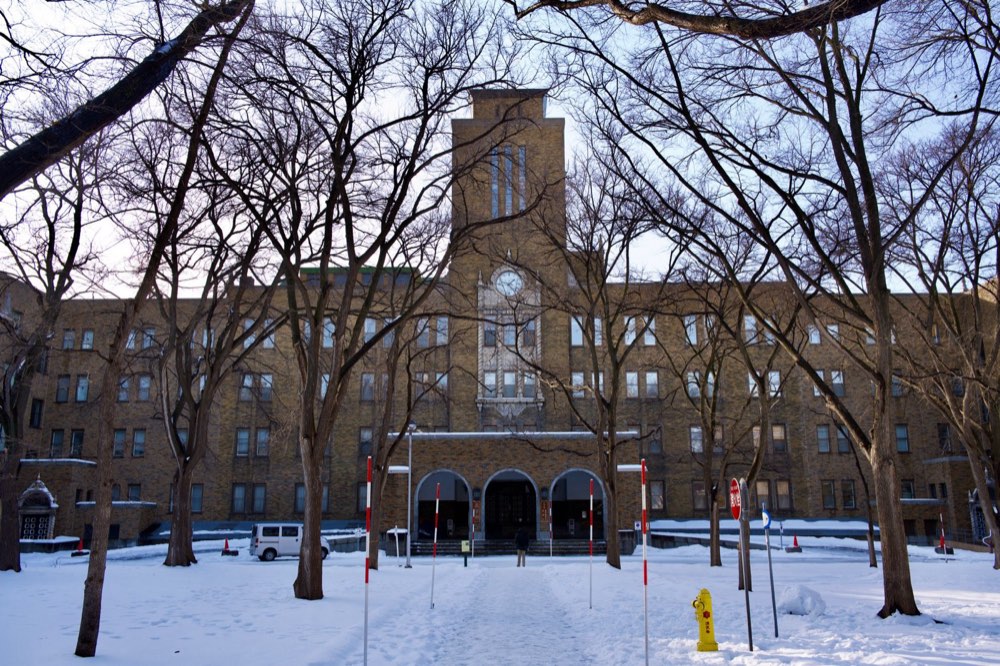
What is Ikueikan University?
Ikuei-kan University, a private Japanese institution, is headquartered at 2290-28 Wakabadai 1-chōme, Wakkanai, Hokkaido. It was founded in 1987 and attained university status in 2000.
| Category | Private (a university established by a school juridical person). |
|---|---|
| Location in Hokkaido | Wakkanai City |
| Founding | 1987 |
| university establishment | 2000 |
| Installer | Hokushin Gakudō (school corporation) |
| Faculty | Faculty of Information Media |
Source: Japanese Wikipedia entry “Ikueikan University” (CC BY-SA 4.0). Verify the latest details with each university’s official information.
The Mirai Kaitaku Club for Iku-ei-kan University students
At universities where students from many faculties mingle, cross-disciplinary encounters become the biggest asset. True Mirai Kaitaku Club is an entrepreneurship community for Hokkaido students, built around three (planned) promises.
Examples of anticipated real-world projects (interdisciplinary & humanities/social sciences).
The next is purely a conceptual example, not an actual request or track record.
- Research the “pain points” of local shops, NPOs, and neighborhood associations, then turn them into proposals.
- Take on both operations and public relations for on- and off-campus events and outreach.
- Turn the topics you tackled in labs or classes into small deliverables—documents, websites, or proposals—aimed at real-world audiences.
The three upcoming steps for the Ikueikan University hub
- Put a proposal on the Agora: I’ll draft “Establish a base at Ikuei-kan University” as a discussion topic. I’ll outline what, why, with whom, and the scope, following the standard format.
- Debate, then restate: Before countering, restate the other person's claim. Dissent is welcome, and every utterance is logged in an immutable record.
- Log it as a task: Items that have been discussed become numbered tasks. Anyone on the network can propose tasks after #task003.
View the Agora / View #task003 / Pull “Ikueikan University” from the library
Things to verify before picking an organization
At orientation and recruitment events, it’s easy to be carried away by hype. Ikueikan University students have compiled a question list and a playbook that works for any organization you’re weighing. We suggest taking a night to think it over before you sign up. See How to Move Without Regretting Your Orientation Choices and How to Choose a Student Organization.
Frequently Asked Questions
When was the Mirai Kaitaku Club at Ikuei-kan University established?
On November 6, 2026, we established the True Mirai Kaitaku Club’s Ikuei-kan University hub. This is where the action kicks off. We plan to start recruiting founding members in December 2026, and we’ll build up our track record and membership from here.
Is this an officially recognized group of Iku Eikan University?
No. This is not an officially recognized group of Iku-ei-kan University, nor is it linked to the university or any related corporation. The university name is simply to show which students we have in mind.
Can non-students of Iku-ei-kan University join?
The hub is centered on students from Ikuei-kan University, but participation from other universities and professionals isn’t limited. Dual affiliations (holding positions in other groups) are welcomed, and the scope of participation will be decided through discussion in the Agora.
How can I join or propose ideas to the Ikueikan University hub?
Posting a topic on the Agora is the first step. Write the "what, why, with whom, and scope" according to the template, debate it, and then turn it into a task. From #task003 onward, any node on the network can propose items.
What real-world projects can students from Iku-eikan University (General Studies, Humanities & Social Sciences) work on?
This is just a conceptual example, but you could, for instance, investigate the “pain points” of local shops, NPOs, and neighborhood associations and turn them into proposals, or take charge of both operations and publicity for on- and off-campus events and outreach activities. The actual assignment is finalized only after you reach an agreement with the client.