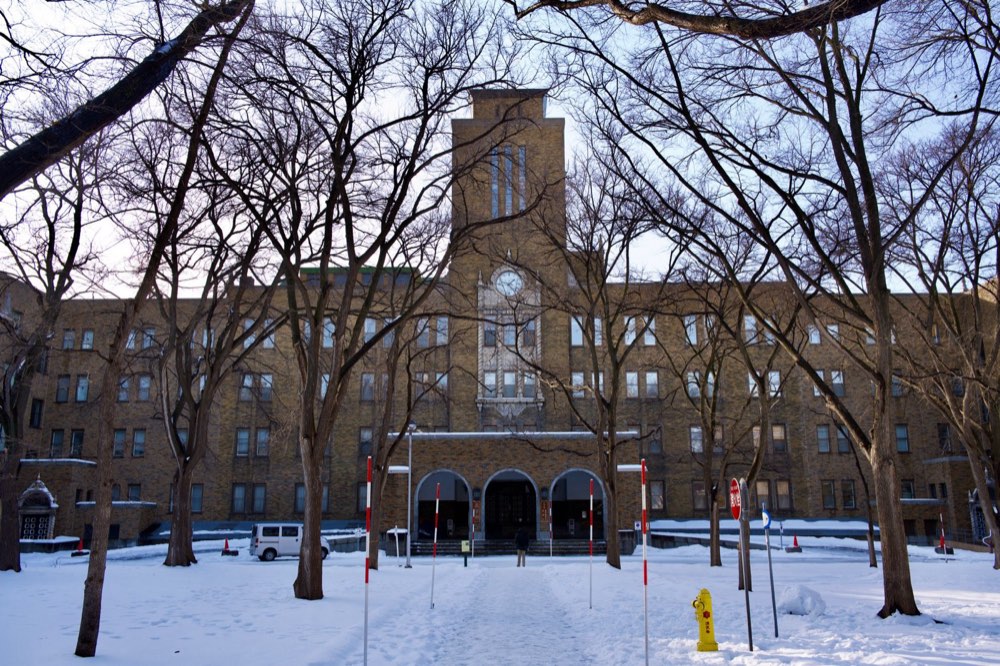
What is Japan Medical University?
Nihon Iryō Daigaku (Japan Medical University) is a private university in Japan, headquartered at 1-50-1, Tsukisamu-higashi 3-jō, Toyohira-ku, Sapporo, Hokkaido. It was founded in 1989 and chartered as a university in 2014. Its abbreviations are Nichi-idai and JHU.
| Category | Private (a university established by a school juridical person). |
|---|---|
| Location in Hokkaido | Sapporo |
| Founding | 1989 |
| university establishment | 2014 |
| Installer | Japan Medical University School Corporation |
| Faculty | Faculty of Health and Medical Sciences, Faculty of Integrated Welfare |
Source: Japanese Wikipedia article “Japan Medical University” (CC BY-SA 4.0). For the latest information, please verify with each university’s official sources.
The Mirai Kaitaku Club for Nihon Medical University students
Because medical and welfare students are swamped with clinical rotations, getting a chance to engage with problems outside the bedside is especially valuable. True Mirai Kaitaku Club is an entrepreneurship community for Hokkaido students, and it puts forward three promises (planned).
Examples of anticipated real-world projects (healthcare, nursing, welfare)
The next is purely a conceptual example, not an actual request or track record.
- Listen to the administrative, communication, and monitoring challenges faced by local medical, nursing, and welfare sites.
- Assist with educational materials and information organization without handling any patient or user personal data (no personal data at all).
- Turn the knowledge we’ve learned into clear, community-focused health and prevention messaging.
The three upcoming steps at the Japan Medical University hub
- Propose a motion in the Agora: “Establish a base at Nihon Medical University.” I’ll write it as a motion for the Agora, outlining what, why, with whom, and the scope according to the template.
- Debate, then restate: Before countering, restate the other person's claim. Dissent is welcome, and every utterance is logged in an immutable record.
- Log it as a task: Items that have been discussed become numbered tasks. Anyone on the network can propose tasks after #task003.
View the Agora / View #task003 / Look up “Japan Medical University” in the library
Things to verify before picking an organization
At orientation and recruitment events, enthusiasm can sweep you away. Students at Nippon Medical University have put together a checklist of questions and a decision-making playbook that works for any club. We recommend sleeping on it before you sign up. See How to avoid regrets at orientation and Choosing the right student organization.
Frequently Asked Questions
When was the Mirai Kaitaku Club at Nihon Medical University established?
On November 6, 2026, we established a True Mirai Kaitaku Club hub at Nippon Medical University. Activities start here. Recruitment of founding members is slated for December 2026, and we’ll build up our track record and membership from now on.
Is this an officially recognized organization of Japan Medical University?
No. This isn’t an officially recognized group of Japan Medical University, nor is it affiliated with the university or any related corporation. We mention the university name only to indicate which students we’re targeting.
Can non-students of Nihon Medical University join?
Our hub revolves around Nippon Medical University students, but we haven’t set any limits on involvement from other campuses or professionals. We actually encourage double-dipping—holding roles in other groups—and we’ll hash out the exact scope of participation in the Agora.
How can we join or propose at the Nippon Medical University hub?
Posting a topic on the Agora is the first step. Write the "what, why, with whom, and scope" according to the template, debate it, and then turn it into a task. From #task003 onward, any node on the network can propose items.
What real-world projects can students from Nippon Medical University (medicine, nursing, welfare) take on?
Just as a conceptual example, we could listen to the administrative, outreach, and monitoring challenges faced by local medical, nursing-care, and welfare sites, and, within a scope that doesn't handle patients' or users' personal data, help create educational materials and organize information (with absolutely no personal data involved). The actual request would be finalized only after mutual agreement.