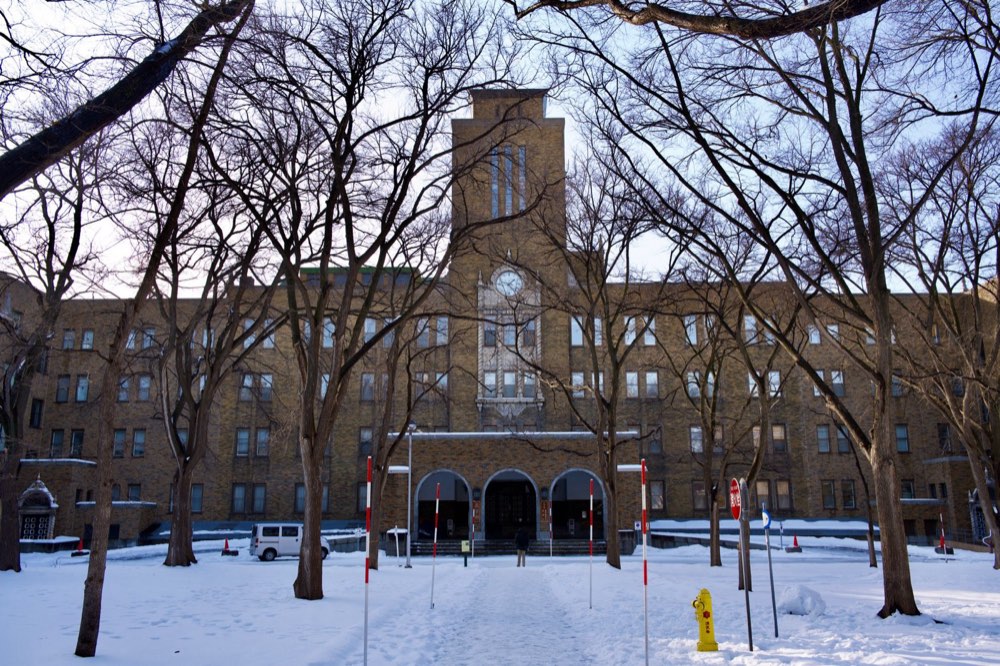
What is Otaru University of Commerce?
Otaru University of Commerce (Otaru Shōka Daigaku) is a Japanese national university headquartered at 21-5-3 Midori, Otaru, Hokkaido. Founded in 1910, it was chartered as a university in 1949.
| Category | National (a university corporation established by the national government) |
|---|---|
| Location in Hokkaido | Otaru City |
| Founding | 1910 |
| university establishment | 1949 |
| Installer | National University Corporation Hokkaido National University System |
| Faculty | Faculty of Commerce (primarily day & night courses) |
Source: Japanese Wikipedia article “Otaru University of Commerce” (CC BY-SA 4.0). For the latest information, please verify with each university’s official sources.
Mirai Kaitaku Club for Otaru University of Commerce students
Business and economics students can put their knack for numbers and systems to the test in real sales, cost, and contract settings. The True Mirai Kaitaku Club is an entrepreneurship community for Hokkaido students, and it puts forward three promises (planned).
Examples of anticipated real-world projects (commerce, economics, management)
The next is purely a conceptual example, not an actual request or track record.
- Analyze and propose solutions for customer acquisition, pricing, and inventory challenges faced by Hokkaido’s retail, food-service, and tourism businesses.
- Take a product or service from concept through sales and customer feedback—all in one go.
- Gain experience that’s evaluated by externally verifiable results—contracts, retention rates, customer feedback, and the like.
Otaru University of Commerce hub: the three steps ahead
- Propose a motion in the Agora: “Establish a base at Otaru College of Commerce.” I’ll write it as a motion for the Agora, outlining what, why, with whom, and the scope according to the template.
- Debate, then restate: Before countering, restate the other person's claim. Dissent is welcome, and every utterance is logged in an immutable record.
- Log it as a task: Items that have been discussed become numbered tasks. Anyone on the network can propose tasks after #task003.
View the Agora / View #task003 / Look up “Otaru College of Commerce” in the library
Things to verify before picking an organization
At orientation events and recruitment drives, it's easy to get swept up by enthusiasm. We've put together a list of questions and a playbook that any Otaru University of Commerce student can use no matter which group they're considering. We recommend sleeping on it before you commit. See How to Navigate Orientation Without Regrets and Choosing a Student Organization.
Frequently Asked Questions
When was the Mirai Kaitaku Club at Otaru University of Commerce established?
On November 6, 2026, we set up the True Mirai Kaitaku Club’s Otaru University of Commerce hub. This is where the action kicks off. Recruiting for founding members will launch in December 2026, and we’ll be building our track record and membership from here on out.
Is this an officially recognized organization of Otaru University of Commerce?
No. We are not an officially recognized organization of Otaru University of Commerce, nor are we affiliated with the university or any related corporation. The university name is listed only to indicate which students we are targeting.
Can non-students of Otaru University of Commerce join?
Our hub is anchored in Otaru University of Commerce students, but we place no limits on students from other schools or working professionals joining. We actually encourage double-hats—holding roles in other groups—and we’ll hash out the exact scope of involvement in the Agora.
How can I join or make proposals at the Otaru University of Commerce hub?
Posting a topic on the Agora is the first step. Write the "what, why, with whom, and scope" according to the template, debate it, and then turn it into a task. From #task003 onward, any node on the network can propose items.
What real-world projects can students at Otaru University of Commerce (business, economics, management) work on?
Just as a hypothetical, we could analyze foot traffic, pricing, and inventory challenges for Hokkaido’s retail, food-service, and tourism businesses, then propose a small product or service, run it through sales, and gauge customer response—all in one cycle. Real requests are finalized only after mutual agreement.